RET insight
FCL vs LCL Shipping to the Philippines: How Importers Can Choose the Right Option
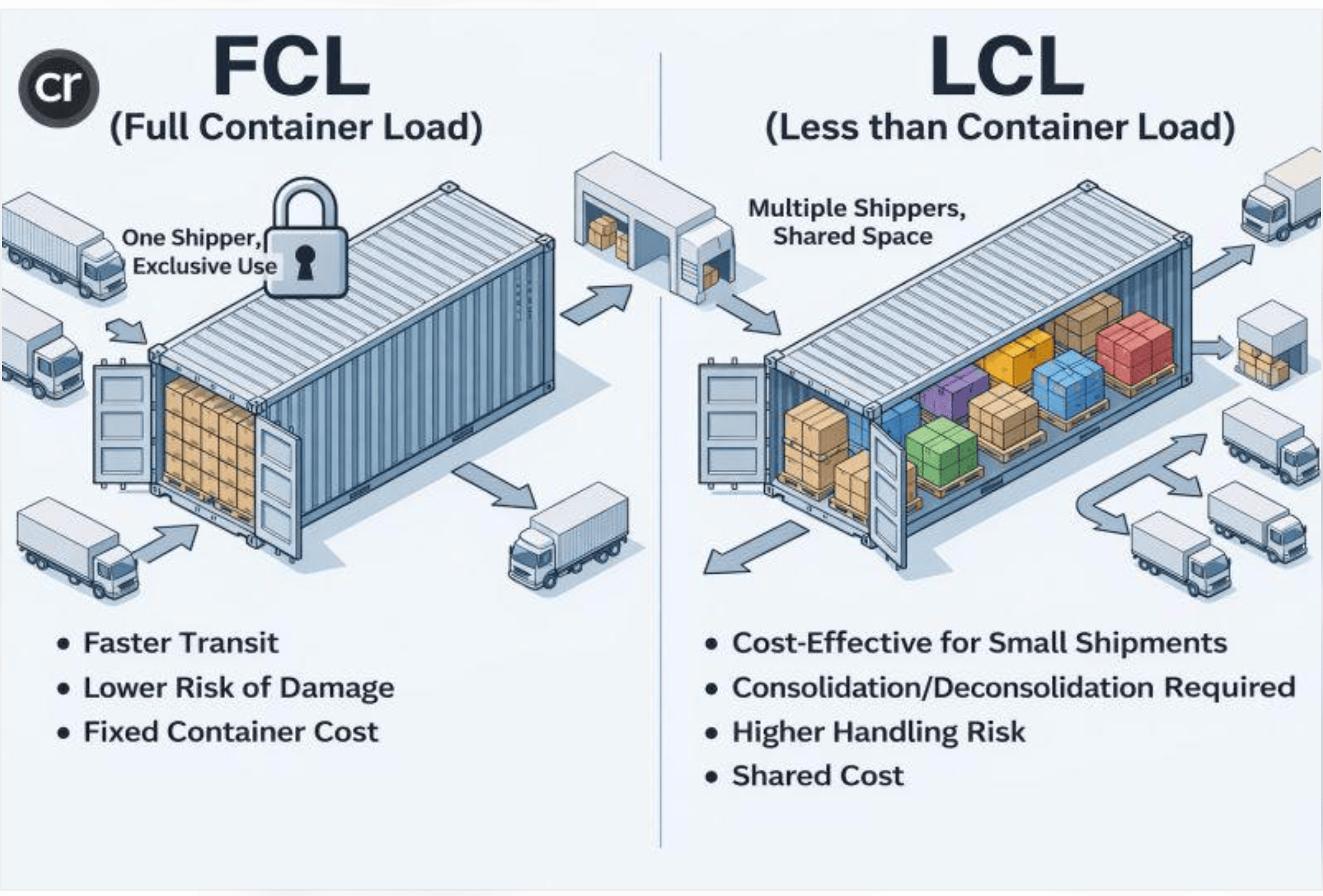
When importing goods into the Philippines, choosing the right shipping arrangement is an important business decision. Some companies regularly import enough products to fill an entire shipping container, while others only need to transport a few pallets or smaller quantities of cargo.
This difference is where FCL and LCL shipping become relevant.
FCL stands for Full Container Load, while LCL means Less than Container Load. Both options are commonly used in international ocean freight, but they serve different shipment requirements.
Choosing between them should not depend on price alone. Cargo volume, handling requirements, delivery schedule, packaging, destination arrangements and customs coordination all deserve attention.
For businesses exploring freight forwarding services Manila, understanding these two shipping methods can make planning easier and help avoid unnecessary complications during transportation.
- What Is FCL Shipping?
FCL, or Full Container Load, refers to an arrangement in which one shipper books the use of an entire shipping container for their cargo.
The shipper does not necessarily have to fill every available space inside the container. The important distinction is that the container is allocated to one shipment rather than being shared with multiple unrelated shipments.
FCL can be a practical option for businesses importing:
- Large quantities of commercial products
- Industrial equipment and machinery
- Raw materials for manufacturing
- Palletized goods
- Regular inventory shipments
- Products requiring dedicated container arrangements
One potential advantage is greater control over how the cargo is loaded and arranged inside the container.
However, FCL is not automatically the cheapest option. Businesses should compare the complete shipment cost, including transportation, handling, destination charges and other applicable expenses.
- What Is LCL Shipping?
LCL, or Less than Container Load, is used when a shipment does not require an entire container.
Under this arrangement, cargo from different shippers is consolidated into a shared container. Each shipper pays according to the applicable shipment volume or freight arrangement.
This option can be useful for businesses that:
- Import smaller product quantities
- Purchase samples or limited inventory
- Work with multiple overseas suppliers
- Are testing a new product in the Philippine market
- Do not have enough cargo to justify an entire container
For small and medium-sized importers, LCL can offer flexibility because they do not need to reserve an entire container for a relatively small shipment.
However, consolidation and deconsolidation introduce additional handling and coordination requirements. These should be considered when planning the shipment.
- FCL vs LCL: Understanding the Main Differences
Both shipping options serve useful purposes, but their operational requirements are different.
RET provides ocean shipping coordination for both FCL and LCL shipments, helping businesses assess container options, booking requirements and cargo movement.
| Comparison | FCL Shipping | LCL Shipping |
| Container arrangement | Dedicated to one shipper’s cargo | Shared with other shipments |
| Cargo volume | Generally suitable for larger shipments | Generally suitable for smaller shipments |
| Cargo handling | Dedicated container arrangement | Consolidation and deconsolidation involved |
| Cost structure | Container-based freight arrangement | Volume or shipment-based arrangement |
| Planning | Container allocation and loading | Consolidation schedule and cargo readiness |
| Ideal users | Manufacturers, distributors and larger importers | Smaller importers and businesses with limited cargo |
There is no universal rule that FCL is always faster or LCL is always cheaper.
The actual result depends on the origin, shipping route, carrier schedule, cargo availability, consolidation arrangements and destination handling process.
A proper quotation should therefore compare the complete cost and expected shipment schedule rather than looking at the ocean freight rate alone.
- How Should Philippine Importers Choose Between FCL and LCL?
Before selecting a shipping arrangement, businesses should review the actual characteristics of their cargo.
Start with Cargo Volume
Calculate the total cargo volume and confirm the number of packages, dimensions and gross weight. Accurate measurements help freight professionals assess suitable arrangements.
Consider the Nature of the Goods
Some products require special packaging, careful handling or specific transportation arrangements. Fragile goods, machinery and sensitive equipment may require additional planning.
Review the Purchase Schedule
A business receiving inventory for a planned production cycle may have different priorities from a company importing occasional samples.
Shipment availability, vessel schedules and delivery requirements should be considered together.
Compare the Complete Cost
Ask for a breakdown of applicable origin and destination charges, freight costs, handling, customs-related expenses and inland transportation.
A lower initial freight quotation does not necessarily mean a lower final logistics cost.
Think About the Final Delivery
Consider where the cargo will be delivered, whether unloading equipment is available and whether the shipment needs temporary storage before distribution.
These details can influence the most practical shipping arrangement.
- Why Customs Coordination Matters in Both FCL and LCL Shipments
Selecting FCL or LCL is only one part of international shipping. Importers must also prepare the information and documentation required for customs processing.
Depending on the shipment and applicable requirements, supporting documents may include:
- Commercial invoice
- Packing list
- Bill of lading
- Product description and specifications
- Country of origin information
- Permits or certificates, where applicable
The details in these documents should be accurate and consistent.
For example, an incomplete product description or incorrect shipment quantity can create questions that need clarification during customs processing.
Philippine import clearance also involves goods declaration, applicable assessment, payment and satisfaction of relevant regulatory requirements.
Businesses looking for dependable customs brokerage services should coordinate with their customs broker before the cargo arrives.
You can review the Bureau of Customs’ official Guidelines on Importation for further information about the import process.
- Understanding the Freight Forwarding Process
A well-organized freight forwarding process connects different stages of an international shipment.
Although the precise workflow depends on the cargo and route, businesses generally need to consider the following activities:
Shipment Planning
The importer shares cargo details, origin, destination, dimensions, weight and preferred schedule.
Freight Arrangement
The suitable transportation option is assessed, and the carrier booking and routing arrangements are coordinated.
Documentation
The commercial and transportation documents are reviewed to identify missing or inconsistent information.
Cargo Movement
The shipment moves through the agreed transportation route, with status updates and coordination between the relevant parties.
Customs Clearance
The importer and customs brokerage team coordinate applicable declarations, documentation and regulatory requirements.
Cargo Release and Delivery
Once the necessary release requirements are completed, transportation and destination arrangements are coordinated.
A dependable logistics partner helps businesses maintain visibility across these connected activities.
This is one reason companies researching freight forwarding services Manila should consider the provider’s ability to coordinate both transportation and customs-related requirements.
- Common Mistakes Importers Should Avoid
Even a well-planned shipment can face avoidable complications when basic information is overlooked.
Here are some issues businesses should pay attention to:
Providing Inaccurate Cargo Measurements
Incorrect dimensions or weight information can affect container planning and freight quotations.
Choosing a Shipping Method Only on Price
The cheapest initial option may not provide the most suitable overall arrangement for the shipment.
Ignoring Destination Charges
Importers should understand the costs that may arise after the cargo reaches its destination.
Sharing Incomplete Documentation
Missing or inconsistent shipment information can lead to additional clarification and administrative work.
Planning Delivery Too Late
Container pickup, unloading, warehouse availability and inland transportation should be considered before arrival.
Avoiding these mistakes starts with better communication between the importer, supplier, freight forwarder and customs broker.
- How RET Customs Brokerage Corp. Supports Importers
RET Customs Brokerage Corp. is a licensed customs brokerage and logistics company based in Makati City, Philippines.
The company supports businesses with customs brokerage, freight forwarding and connected cargo services.
Its freight coordination capabilities cover air, ocean and inland transportation through carrier and logistics partner networks.
RET’s services include:
Ocean Shipping: Coordination of FCL and LCL shipment requirements, vessel booking, documentation and cargo tracking.
Freight Forwarding: Air, sea and land freight coordination, routing, booking and shipment status support.
Customs Brokerage: Assistance with documentation review, tariff classification, valuation guidance, permits, customs processing and lawful cargo release.
Trade Compliance: Support for businesses reviewing applicable Philippine import and export requirements.
Crating and Packaging: Cargo-specific packaging and protective crating considerations.
Trucking Services: Inland transportation coordination for port pickup and destination delivery.
Warehousing: Storage coordination and related cargo-handling workflows.
Businesses searching for Brokerage services Philippines or a reliable Brokerage company Manila can discuss their shipment requirements with RET.
The objective is to connect the important stages of cargo movement through better preparation, communication and operational coordination.
- Questions Businesses Should Ask Before Booking Ocean Freight
Before confirming an FCL or LCL shipment, importers should obtain answers to a few practical questions:
- What are the confirmed cargo dimensions and gross weight?
- Is FCL or LCL more suitable for the shipment?
- What charges are included in the freight quotation?
- What is the expected vessel schedule?
- Are any special handling or packaging arrangements required?
- Which documents should be prepared before dispatch?
- Who will coordinate customs clearance in the Philippines?
- How will the cargo reach its final destination?
Having these answers early helps businesses make more informed decisions and avoid confusion during shipment execution.
Conclusion
FCL and LCL shipping are both useful options for businesses importing goods into the Philippines. The right choice depends on cargo volume, product characteristics, shipping schedules, total logistics costs and destination requirements.
A business importing regular large quantities may prefer a dedicated container arrangement, while a company with smaller shipments may find cargo consolidation more practical.
Regardless of the option selected, accurate documentation and coordination between freight forwarding and customs brokerage remain essential.
For businesses seeking freight forwarding services Manila, Brokerage services Philippines or professional customs brokerage services, working with an experienced logistics partner can help create a more organized shipping process.
RET Customs Brokerage Corp. combines customs brokerage expertise with freight and cargo coordination to support importers and exporters across the Philippines.
Planning your next ocean shipment? Contact RET Customs Brokerage Corp. to discuss your cargo volume, transportation requirements and customs coordination needs.
RET Customs Brokerage Corp. – Connecting customs brokerage, freight forwarding and logistics support for businesses across the Philippines.